
Films catalogue
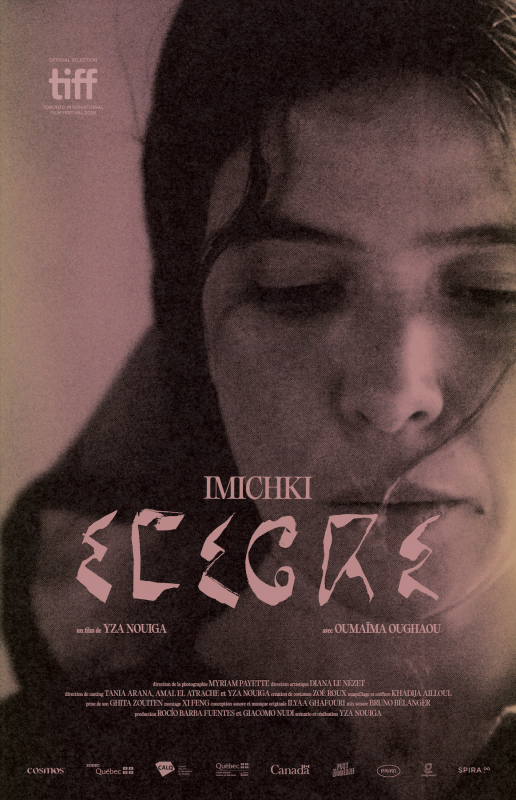
Imichki
Synopsis
In 1975, in a village in southern Morocco, a young illiterate woman’s attempt to write to her absent husband becomes an intimate act of resistance against silence, distance, and the limits imposed on her world.
Cast & Crew
- Screenplay : Yza Nouiga
- Cinematography : Myriam Payette
- Production design : Diana Le Nézet
- Editing : Xi Feng
- Sound design and original music : IIyaa Ghafouri
- Production : Giacomo Nudi, Rocío B. Fuentes
- Cast : Oumaima Oughaou, Youssef Ourras
Genre
Topics
Trailer
Biography

Yza Nouiga is a French-Moroccan filmmaker and archival researcher. She graduated from the National Institute of Image and Sound in Montreal, where she studied screenwriting. Her short film Jardins Paradise was selected by several experimental festivals in Canada and internationally. As part of the RIDM Talent Lab, Yza received the NFB Award for the development of her short documentary Jwad Amira (aka HOUB).
In 2026, Yza directed her first fiction short, Imichki, which received support from the CALQ and SODEC. Through her research and creative practice, Yza revisits questions of heritage and the condition of women by exploring hybrid forms that blend documentary and fiction.
Festivals
[2026] TIFF, Canada
[2026] FNC, Canada
[2026] Cairo International Film Festival, Egypt
Director's statement
Imichki means "the lost one" in Tachelhit. It names those who left and never returned, those who might have forgotten their land. This word was born of successive events that ran through the 20th-century in Morocco, from colonial and postcolonial times: forced recruitment of soldiers, laborers, rural exodus and then the countless brave dreamers who in turn decided to set out. These massive departures on the continent or across the sea fill villages with stories of "Imichki".
It was in pursuing these stories that I came across an oral poem, a timnadin from a distant time. It spoke of a woman who wished she could "be a letter, folded into her beloved's suitcase." I was struck by this simple and impossible desire. This image called up another imaginary in me. As I dug into the history of those who left, I crossed paths with those who had stayed behind. They spoke of absence with a modesty that moved me.
I found that desire is most intense in what fails to be said. I imagined how this woman hoped to find again the body she missed: by what path, by what gesture. By going for news, or seeking to meet him. It was perhaps by calling upon memories that she best managed to find him again. And through being called upon again and again, these memories transformed into fantasies until they came to inhabit the territory around her.
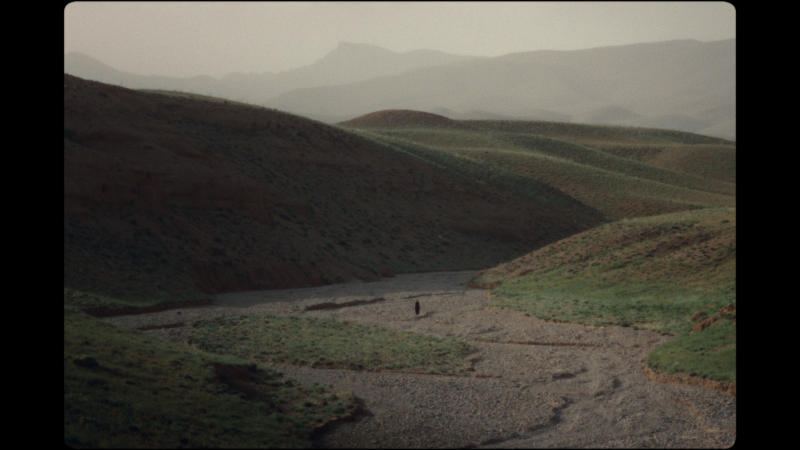
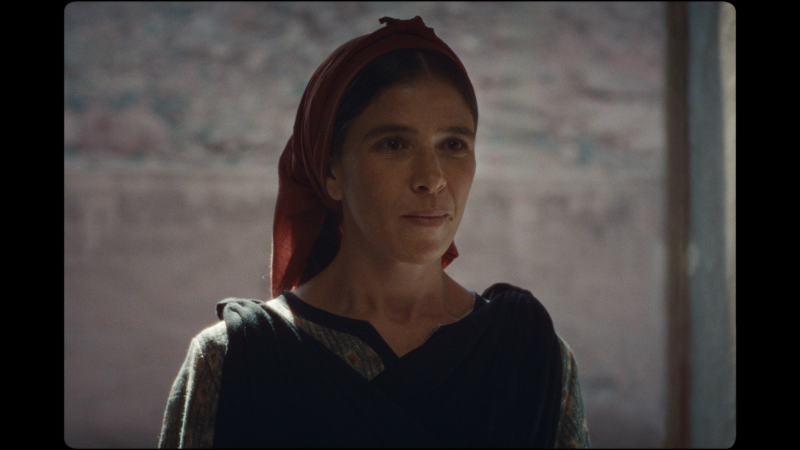
I wanted to imagine a film that would tell this territory through the eyes of a woman, Meriem, who still searches its landscapes for a presence.
Photos
These films might also interest you
Passageways
Passageways
Retracing their steps
Retracing their steps
Kinship
Kinship
Our Hands
Our Hands
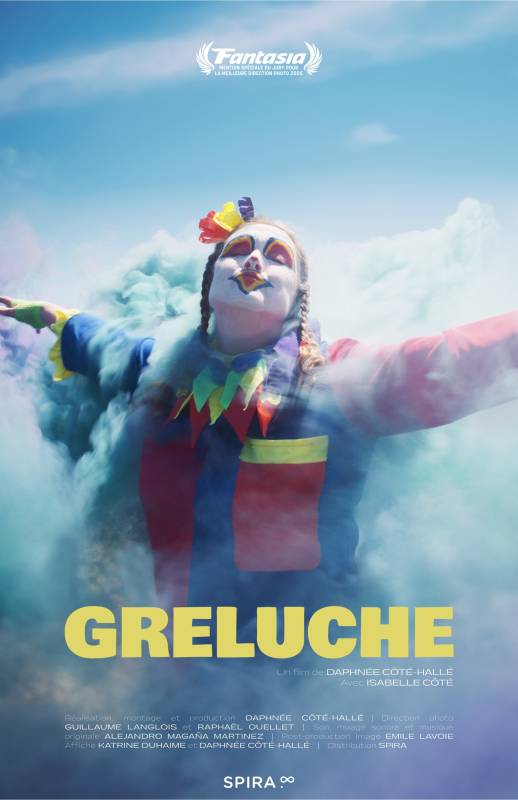
Greluche
Greluche

Balance
Balance

Lana
Lana
